
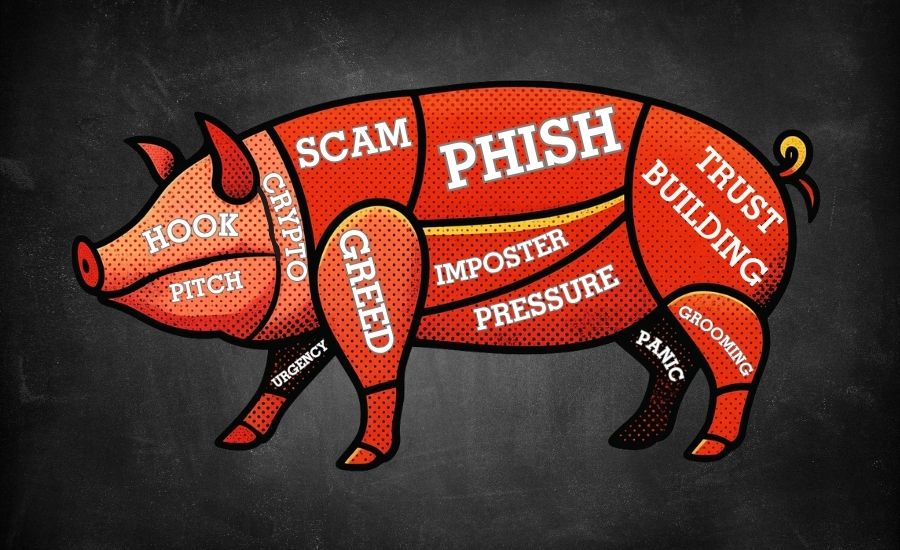
Despite the odd name, pig butchering scams have nothing to do with bacon, and no one is going to try to con you into buying a freezer full of pork chops.
Sometimes called a “relationship investment scam” or “cryptocurrency investment fraud,” pig butchering scams combine elements of romance scams, investment fraud, and social engineering—and the losses can be devastating.
According to the FBI, cryptocurrency investment fraud has become one of the most prevalent and damaging fraud schemes in the country. In 2024 alone, approximately 59,000 people reported falling victim to romance-related scams, with losses totaling more than $672 million.1 Sadly, those figures represent only the crimes that were reported.
Pig Butchering vs. Phishing
Unlike phishing scammers, who try to trick you with a single email or text, pig butchering scammers may spend weeks or even months building a relationship with their target before discussing money.
The unsettling name of the scheme refers to the agricultural practice of fattening a pig before slaughter. In this scam, however, criminals "fatten up" their victims by establishing a deep sense of trust and fabricating an image of financial success.
That grooming process gradually lowers the victim's psychological defenses. So, by the time the scammer introduces an investment opportunity, the person making the recommendation no longer feels like a stranger.
Eventually, when the victim tries to withdraw their money, they discover that the investment, its returns, and their “friend” were not what they appeared to be.
How it Starts
The first contact from a pig butchering scammer will likely seem completely innocent. You might receive a text from an unknown number asking if you're "still meeting for dinner." Or, someone might send a friendly message through social media or a dating app.
If it's a wrong-number text, you might politely tell the sender they have the wrong person. But instead of ending the conversation, they strike up a chat.
After establishing a connection, the scammers will often suggest moving the conversation over to an encrypted chat platform, such as WeChat or WhatsApp. These private, encrypted platforms can make communications more difficult for law enforcement and platform operators to monitor or trace.
In some cases, the relationship becomes romantic. In others, the scammer simply positions themselves as a new friend or successful professional who enjoys talking with you.
But it isn't idle conversation. The scammer's aim is to make you feel heard and valued. So, over time, the messages become more frequent and personal as the stranger remains curious about your job, family, passions, and financial goals.
The Turn
Eventually, the conversation turns to money.
Your new friend may casually mention how well they've done investing in cryptocurrency, foreign currencies, or precious metals. They may share screenshots showing impressive returns or tell you they have a relative, mentor, or financial expert who has helped them become successful.
Often, pig-butchering scammers avoid triggering red flags by making the victim feel like they're making their own investment decisions. Rather than asking you to hand over cash, they offer to show you how the investment process works. They direct you to an investment website or app that looks legitimate and encourage you to start with a relatively small amount of money. Pretty soon, that small investment appears to pay off.
The Scam
Once you believe the investment is working, the pressure to invest more begins. The faux investment website shows your investment growing rapidly with convincing transaction histories and impressive returns.
But since the criminals control the website or platform, those numbers aren't necessarily connected to any real investment. So, they can make your account appear to be worth whatever they want.
They may even allow you to withdraw a small amount of money early in the scheme. That successful withdrawal makes the investment seem legitimate, but it's designed to encourage you to invest considerably more. From there, the scammer may encourage you to transfer savings, borrow money, cash out legitimate investments, or tap retirement accounts to take advantage of an opportunity before it disappears.
The Catch
Eventually, you decide to withdraw some or all of your supposed earnings, but there’s a problem.
You may be told that you need to pay a tax, processing fee, commission, or security deposit before your funds can be released. You pay it, but other problems arise, requiring additional payments. In other cases, the scammer stops responding, your account is suddenly inaccessible, or the entire investment platform disappears. Either way, by the time you realize something is wrong, your money may already be long gone.
Pig Butchering Red Flags
Pig-butchering scams can be difficult to spot because they are deliberately designed to unfold slowly. By the time money enters the conversation, the scammer has spent weeks checking in with you, learning about your life, and establishing themselves as someone you know and trust. That can make warnings from friends, family members, and financial institutions feel like interference rather than help.
These scams don't typically rely on threats or intimidation. Instead, their effectiveness comes from patience, trust, and careful manipulation. There are, however, some common warning signs.
Be cautious if:
- A stranger contacts you unexpectedly and quickly tries to build a friendship or romantic relationship.
- Someone you’ve only met online wants to move your conversations to a private messaging app.
- A new friend or romantic interest begins offering unsolicited investment advice.
- Someone claims to have a special investment strategy, insider knowledge, or unusually consistent returns.
- You’re directed to an unfamiliar investment website or app.
- You’re encouraged to invest in cryptocurrency or transfer money to a digital wallet you don’t control.
- An investment appears to produce unusually large or guaranteed returns.
- You’re pressured to invest more after seeing apparent profits.
- You can’t withdraw your money without first paying additional taxes or fees.
No single warning sign automatically means you're dealing with a scam. But when a new online relationship and an investment opportunity begin to overlap, it's a good reason to slow down and independently investigate.
“With romance scams on the rise and more and more people being targeted, it’s imperative that everyone uses extreme caution online to avoid being emotionally devastated and financially drained,” stated U.S. Attorney DiGiacomo. “Be very cautious about what you share online and do not engage with any online requests for money. Trust your gut; if it doesn’t feel right, it probably isn’t.”1
Just as importantly, if someone you trust raises concerns about an online relationship or investment, hear them out. Before sending money or investing, independently research the investment, website, and person involved. Don't rely on links, screenshots, documents, or contact information provided by the person recommending the investment-even if you trust them.
If You Think You’re Being Scammed
If you suspect you're involved in a pig butchering scam, stop sending money immediately. Don't pay additional fees or taxes in an attempt to recover what you've already sent.
Next, contact your financial institution. Depending on the payment method used and how recently the money was transferred, there may be steps you can take to help protect your accounts or recover funds.
You should also report the fraud to law enforcement, including the FBI’s Internet Crime Complaint Center (IC3) and the appropriate federal regulators.
In the aftermath, be cautious about anyone who contacts you promising to recover your money for a fee. Victims of investment fraud are sometimes targeted a second time through "recovery" scams.
- U.S. Attorney’s Office, Western District of New York. (2026, February 12). U.S. Attorney, FBI and HSI issue warning about latest romance and other online investment scams. U.S. Department of Justice. ↩︎